 Thomas Jefferson, the third President of the United States, is often celebrated for his role as a Founding Father, principal author of the Declaration of Independence, and a statesman who profoundly influenced the trajectory of American history.

Christian mentorship is not merely an optional practice; it is foundational to spiritual growth and discipleship. Drawing inspiration from the Bible, where mentorship relationships are evident, such as Moses and Joshua, Elijah and Elisha, and, notably, Jesus and His disciples, this practice encourages believers to invest in one another’s lives profoundly. In a Christian context, mentorship is about more than just imparting knowledge; it is about living life together, sharing faith experiences, and encouraging one another in Christ.
Donald J. Trump, the 45th President of the United States, is a figure celebrated for his business acumen and direct communication style. Known as a real estate mogul and television personality before entering politics, Trump built a vast and influential empire with properties and brands recognized worldwide. His straightforward approach and innovative strategies revolutionized the real estate industry, earning him recognition as a savvy entrepreneur.

Faith in God can indeed be tested through various life challenges such as illness, financial hardships, relationship struggles, or personal doubts. These adversities can test the very foundation of one's beliefs, prompting questions about divine presence and purpose. However, such trials can also serve to strengthen and refine one's faith, fostering resilience and a deeper spiritual connection.
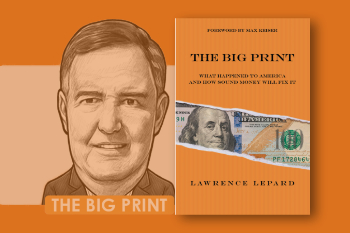
 "The Big Print" by Lawrence Lepard explores the implications of monetary policies and the global financial system. Lepard critiques the excessive money printing practices of central banks, which he argues lead to inflation and devaluation of currency. His analysis highlights how these actions disproportionately benefit large financial institutions and government bodies while undermining the economic stability of the average citizen.
Lepard emphasizes that continuous money printing acts as a short-term solution that fails to address underlying economic issues. Instead, it creates asset bubbles and increases the risk of a significant financial crisis. He suggests that the lack of fiscal responsibility and the prioritization of immediate economic stability over long-term health could have dire consequences.
To mitigate these effects, Lepard advocates for more prudent financial policies, including reducing dependency on fiat currency. He encourages investment in tangible assets like gold, which, in his view, helps preserve wealth against inflation. The notion is that gold and other hard assets provide a hedge against the systemic risks posed by excessive monetary expansion.
Moreover, Lepard calls for increased transparency and accountability in financial institutions and government actions. He believes that a shift towards sound money principles could foster economic resilience and protect future generations from financial instability.
Ultimately, "The Big Print" serves as a warning about the trajectory of current monetary policies and a call for reform to ensure sustainable economic health.
Your partner,
(c) Apostle Jonas Clark
www.jonasclark.com